


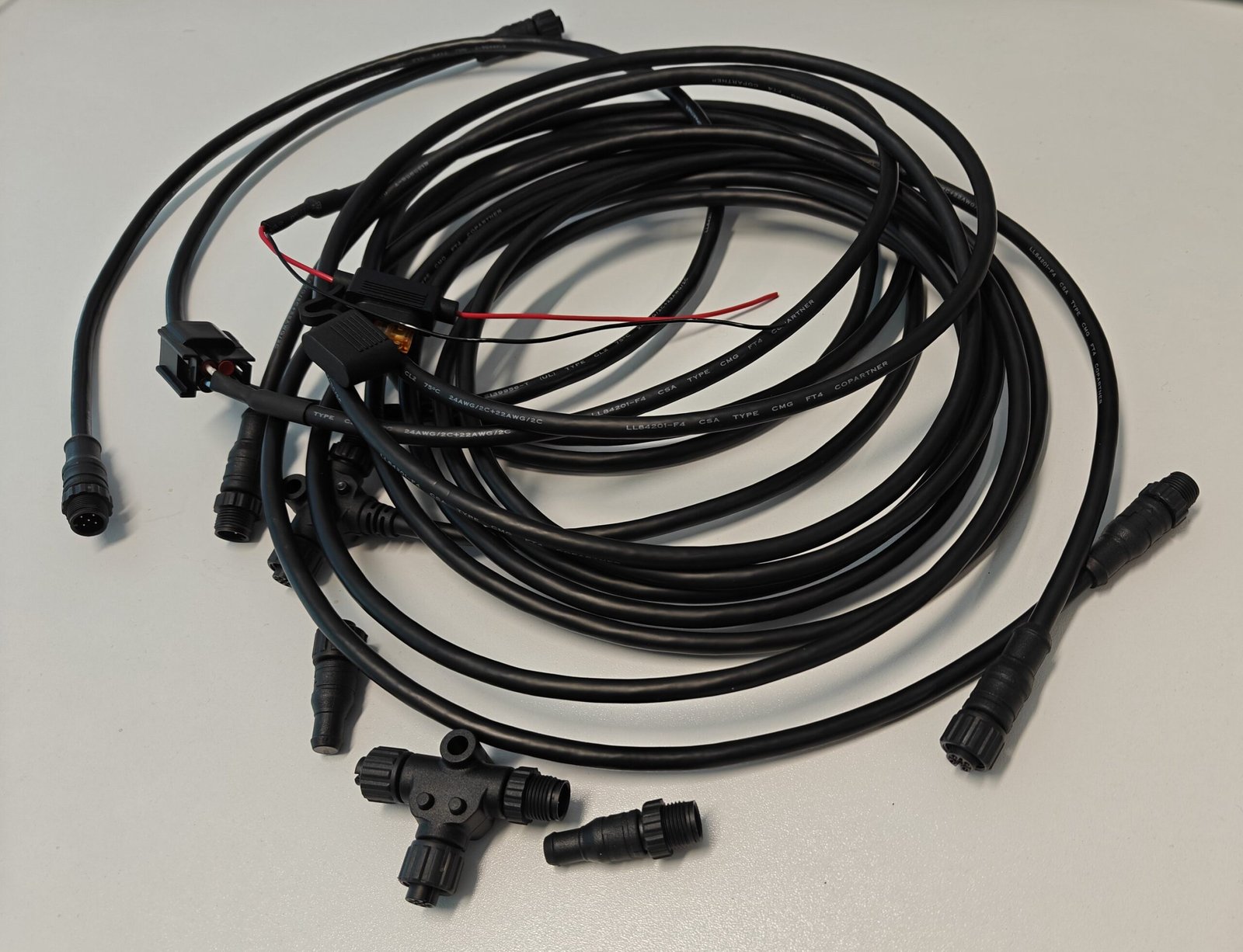
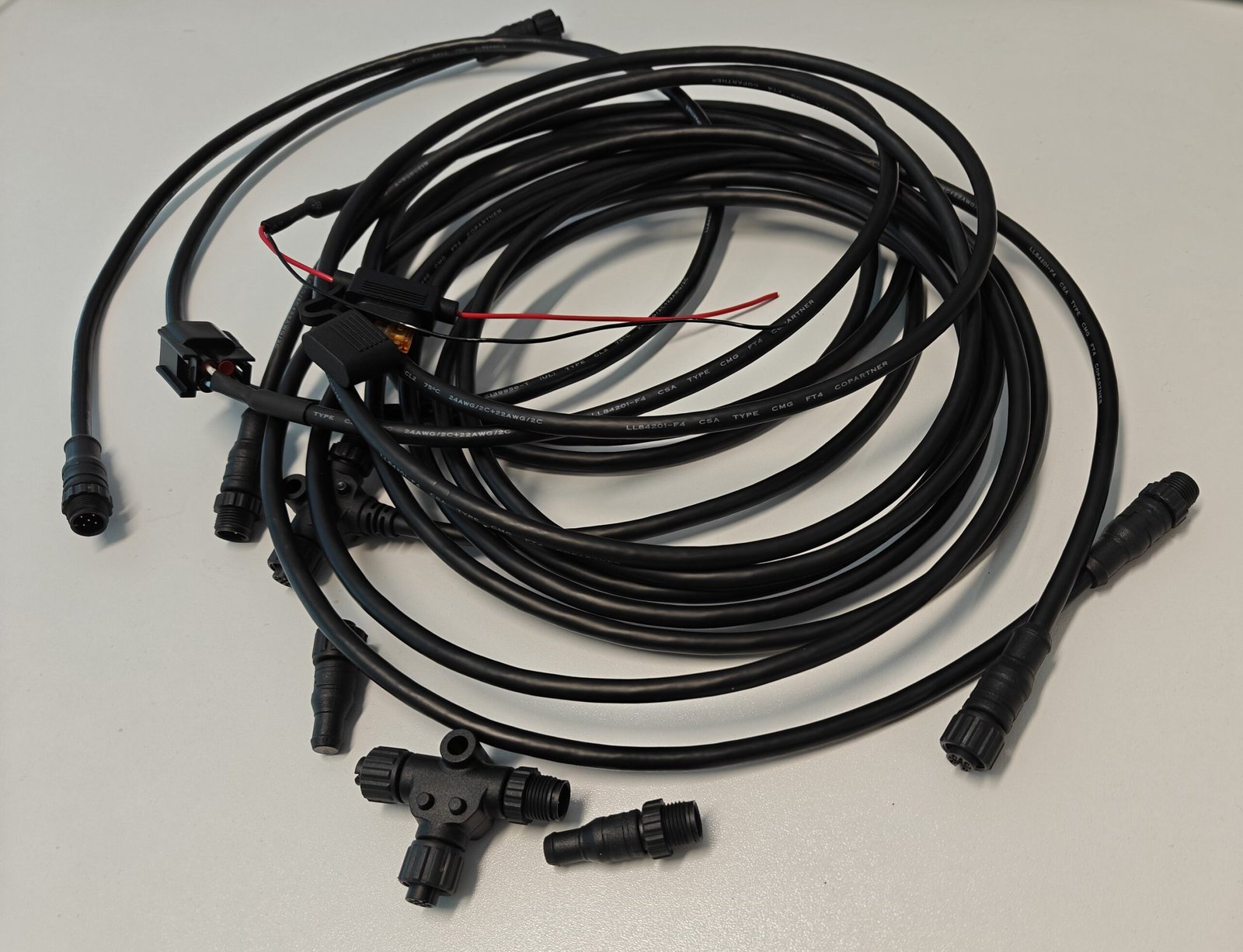
Basic components of an NMEA 2000 network
An NMEA 2000 network is built from a few core components that enable reliable, standardised data transfer between the different devices on a boat.
1. NMEA 2000 compatible devices
When planning an NMEA 2000 network, start from the devices already on the boat and from future expansion needs. The boat must have devices that support the NMEA 2000 protocol. Most modern fishfinders, multifunction displays, outboards, sensors and stereos support the protocol natively. You can check compatibility in the device manual or by contacting our customer service.
NMEA 2000 devices typically use a Micro-C connector, which is a sure sign of compatibility. Devices usually have a male Micro-C connector. There is also a heavy-duty NMEA 2000 connector, but it is less common in consumer use.
2. Drop cables
An NMEA 2000 compatible device is connected to the network with a device cable, or ”drop cable”. Fimarin backbone cables work as both backbone and drop cables, and the range includes 1, 2 and 4 metre Micro-C cables for use as drop cables.
According to the standard, the maximum length of a single drop cable is 6 metres, and the total length of all drop cables may be at most 78 metres. In normal small boats, staying within these limits has not caused any problems so far.
3. T-connectors
Each device is connected to the network via a T-connector. A standard T-connector connects one device, but multi-port versions are also available. Several connectors can be used in a network depending on the number of devices and the installation. Branching must, however, always start from the backbone cable. A drop cable that has already been branched must not be branched again at the device end for a neighbouring device; each device needs its own T-connector on the backbone.
4. Backbone cables
Backbone cables form the spine of the network. The network is built from T-connectors and the backbone cables between them. One device is connected to the NMEA 2000 network through each T-connector with a drop cable. In small boats it is typically enough to install one backbone cable along the length of the boat. The engine, 12V power and possibly the fishfinder transducer are often connected at the stern end. The fishfinder display and other accessories are connected at the other end. In larger boats with many NMEA 2000 devices, the backbone can run in a loop along both sides. In that case the backbone consists of several backbone cables with T-connectors between them for the NMEA 2000 devices.
Fimarin backbone cables are available in lengths from 1 to 8 metres. The total backbone length may be at most 100 metres with Micro-C cables.
5. Terminators
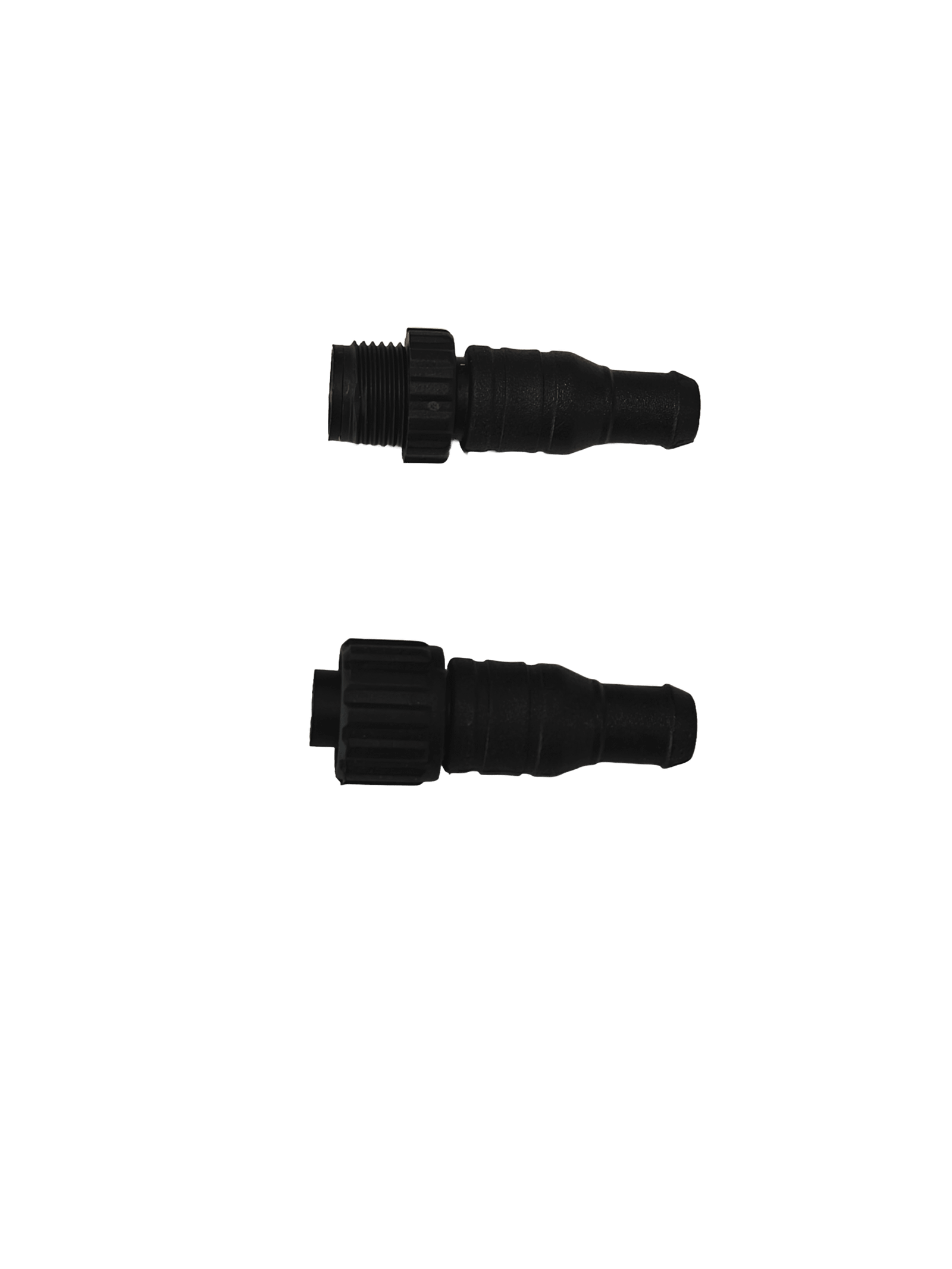
Terminators are a critical part of an NMEA 2000 network. A 120 ohm terminator is installed at each end of the network. This creates a total resistance of 60 ohms between the data lines, which is essential for a working network. An NMEA 2000 network must have two terminators. One terminator gives the network too high a resistance, and three or more too low.
6. Power cable
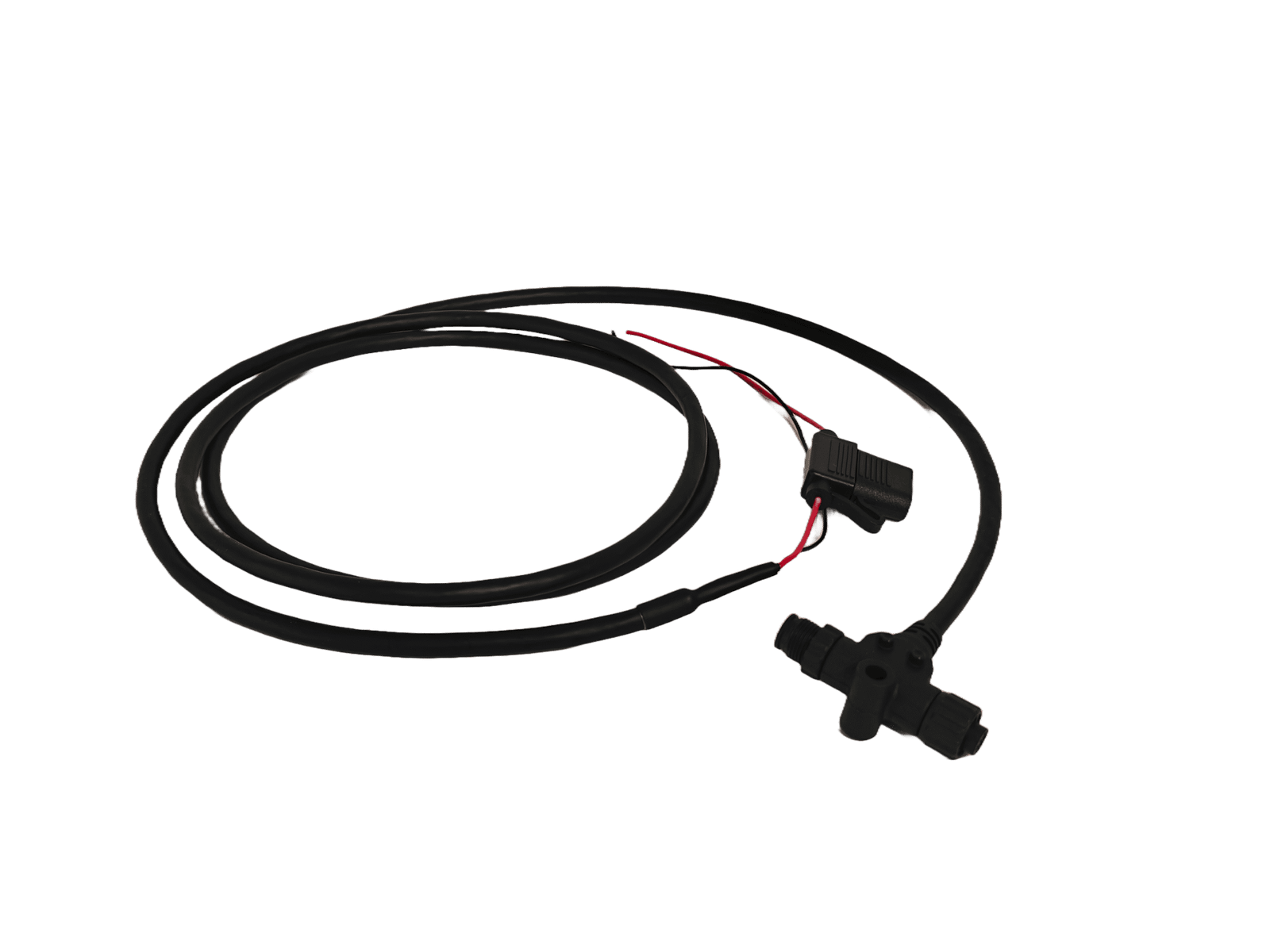
The NMEA 2000 network requires 12 V to operate. The fused power cable is usually connected directly to the battery via the boat's main switch. The power cable should be installed in the middle of the network, especially in larger systems, so that the voltage is distributed evenly to both sides of the network. In short installations with few devices, however, it is acceptable to take power from either end of the network.
The maximum voltage of an NMEA 2000 system is 16 V. In a normal 12 V battery system the power cable is connected directly to the battery via the main switch, but 24 V systems require a voltage converter. Note that when connected directly to the battery, devices on the NMEA 2000 network can draw power even when they are switched off. This easily leads to a flat battery while the boat is not in use. That is why a main switch is essential.
The Fimarin range includes two types of power cable:
- A two-metre power cable with a pre-installed T-connector
- A straight power cable, which requires a separate T-connector during installation. This is handy in installations where power has to be taken from more than two metres away. You can extend the power cable with any backbone cable and connect it to the actual network with a T-connector.
7. The simplest NMEA 2000 system
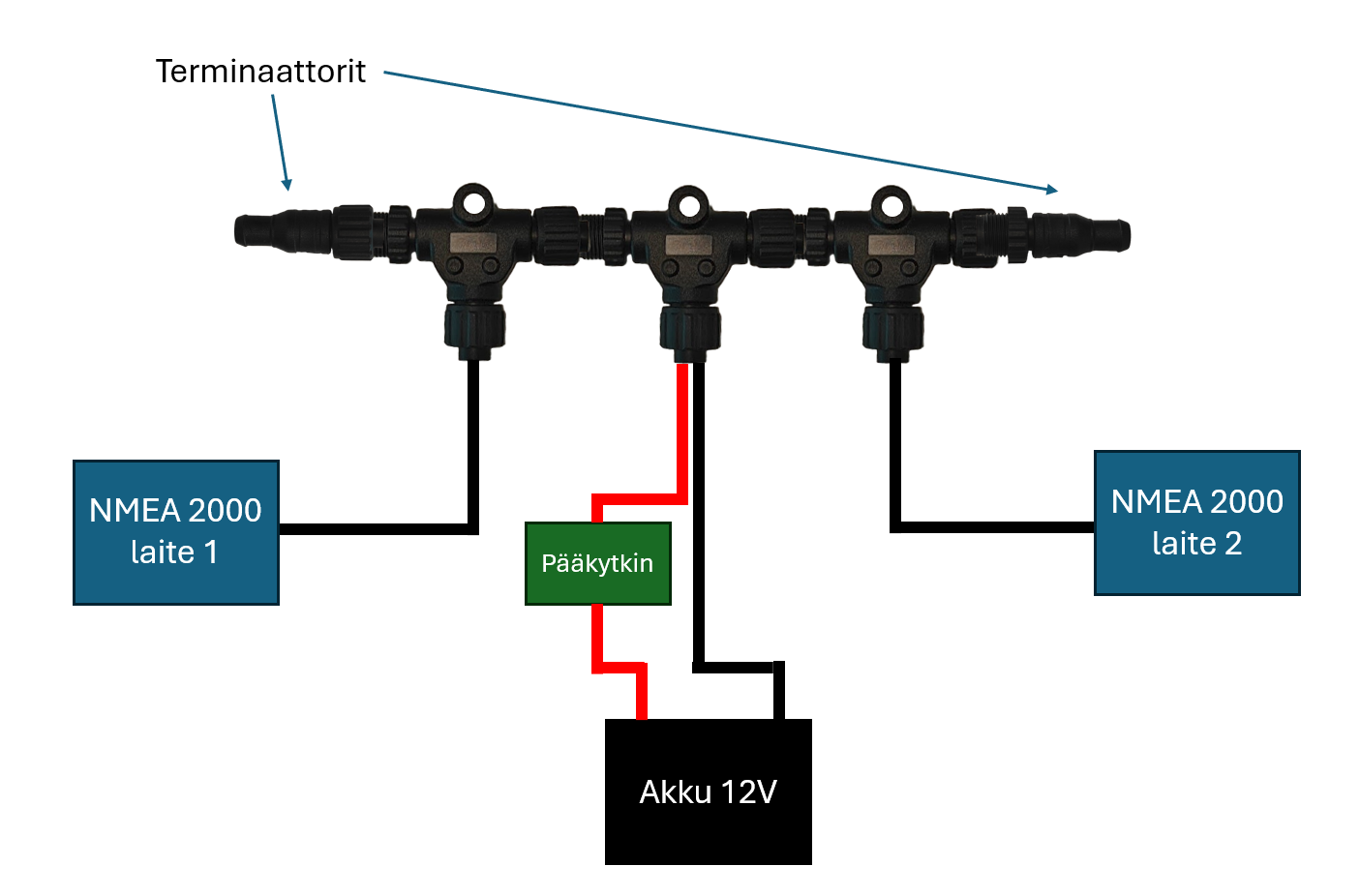
At its simplest, an NMEA 2000 system consists of two terminators, two devices, two drop cables, two T-connectors and one power cable with a T-connector. Using this principle, you can expand the network as you wish. Backbone cables of the required length can be added between the T-connectors, and drop cables for the devices. To expand the network, add more T-connectors to the backbone and connect new devices with drop cables.
Leave a Reply